
Capacity Building Program
Debriefing &
Mutual Support
Embed supportive practices into your workplace
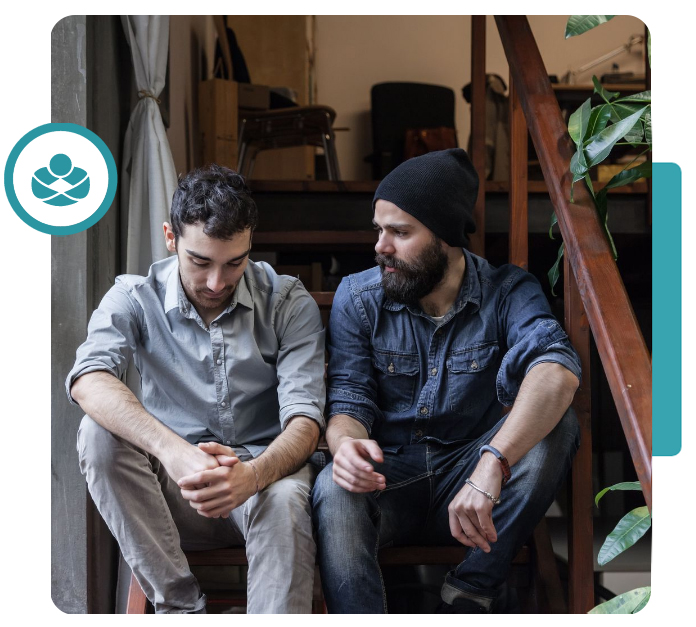

Does your organization have a clear plan for supporting staff after difficult events?
Without a clear structure for support, staff in high-stress workplaces often carry the emotional weight of their work alone. These difficult experiences don’t just impact one person: they create a ripple effect throughout your entire organization. Over time, this can lead to increased stress, turnover, and an erosion of your staff’s commitment to the values and mission of their work.
The Debriefing & Mutual Support program is a professional development program that helps you build the foundation for a tailored, organization-wide support plan. This means that your people will know when, why, and how to best support one another through the unique challenges of your workplace.
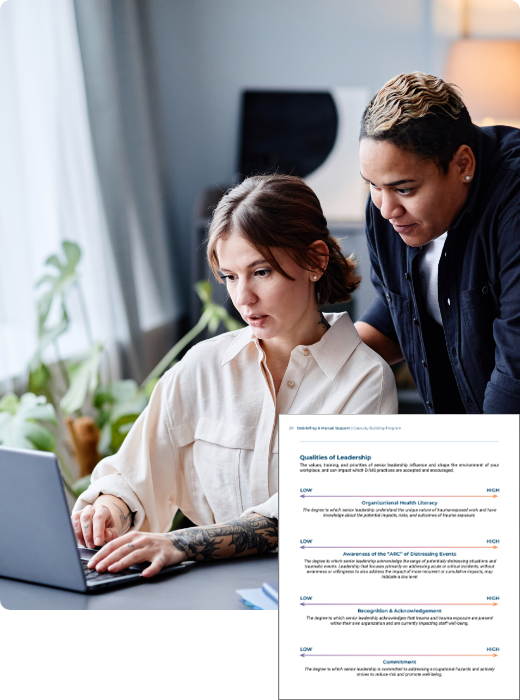
Your Customized Debriefing & Mutual Support (D/MS) Blueprint
At the end of this program, you will have a strong foundation for building a tailored D/MS plan.
After reviewing a wealth of tools and strategies, you will identify the practices that your team will use to:
- Manage critical incidents
- Support one another in the aftermath of difficult situations
- Build buffers against the day-to-day stress of complex work
Complex workplaces need a comprehensive strategy
When building a support plan, workplaces often focus on crisis situations. However in trauma-exposed work, staff are often encountering difficult situations every day. This program helps you broaden your understanding of workplace support and identify the strategies needed to protect against the “costs of caring” such as secondary traumatic stress and moral distress.



Understand what helps and what may be causing harm
Research shows that some commonly used debriefing models may unintentionally do more harm than good. In this program, we take a closer look at this issue and offer a thoughtful overview of both the benefits and limitations of some models. More importantly, we provide alternatives and adjustments grounded in current trauma research.
What past participants are saying about this program
“The D/MS program provided a foundation for building our mutual support efforts. TEND translated a wide volume of evidence into practical, adaptable strategies that helped us move beyond isolated debriefing efforts toward a more thoughtful, sustainable approach to supporting staff. The focus on practical application gave our team the confidence and structure to implement peer support in ways that meet the needs of our organization.”
Dr. Janine Rowe, Director
University of Rochester Medicine EAP, OAP, COAP
“More healthcare professionals need to be versed in this content so we are all speaking the same language and can more readily support one another.”
Jennifer Jollymore, Clinical Nurse Specialist
IWK Health
“It was very enjoyable and motivating.”
Emma Burns, Medical Director, Pediatric Emergency Medicine
Spring 2026
“This is an excellent program to take. I would suggest that, if you’re in an organization, to have more than one staff participate so they can work together and support a good outcome for the needs of the agency.”
Tina Knorr, Counsellor
Street Health Centre
“It is a really great overall review of resources, models and how and when to use them. The trauma informed care language distinguishing factors is very helpful in assessing how well it is integrated in your workplace and truly should be the basis for program development.”
Renee Kampman, Peer Support & Staff Wellness Program Coordinator
Alberta Health Services
“A beautiful opportunity to learn a valuable and current approach to debriefing and mutual support.”
Past Participant
Spring 2025
“It is a great course with an overview of what is available and how to choose what type of debriefing is needed, and/or effective for the circumstances and learning about using trauma-informed care practices.”
Past Participant
Winter 2025
“TAKE THIS COURSE! If you are invested in supporting your workplace through debriefing and mutual support, this course will give you the tools to build that foundation.”
Past Participant
Spring 2025
“Well worth the investment. You are offered a menu of options that you can consider for your org’s unique context and needs.”
Past Participant
Spring 2024
“If you are committed to The National Standard and embedding a Psychological Health and Safety Management System into your organization strategies (People, EDI etc.), this program supports all but notably the area of opportunity to train on supporting incidents and trauma responses by a worker and/or the unit (team). This program is also a vital link to your mental rehearsal (TWM The Big 4) preparations.”
Past Participant
Spring 2024
“I would highly recommend this education for any environments where trauma may be experienced. I think the training will definitely support staff with psychological health and safety in the workplace.”
Past Participant
Winter 2025
“It is absolutely worth attending and would highly recommend if a few people from the organization could attend together. Having a team of us attend that will form the foundation of a working group has made this easier for us.”
Past Participant
Spring 2025
“The cost is completely worth it because of the instructors, content and the professionalism of the group. The data driven work of TEND is made consumable for any employee group wanting to do better. You walk away with materials, assessments and plans to put in to action for your organization. You get the benefit of direct teaching and numerous resources that might pertain to your agency.”
Past Participant
Spring 2025
“Absolutely take it. Also do the prerequisites, it will help. I walked away with a roadmap to start to build programming internally which is exactly what I needed. I also realize that it doesn’t have to look the same in different parts of the organization which is really helpful.”
Participant
Spring 2025
“Excellent training with skilled and knowledgeable professionals as presenters…who really know their stuff!”
Participant
Spring 2024
“Expect to walk away with tools to create something vs a readymade solution that is one size fits all. YET another practical training session with well laid out resources by TEND so you can’t go wrong!”
Past Particpant
Spring 2026


Developed by Diana Tikasz
MSW, RSW
Resilience Specialist, TEND Associate
“When it comes to wellness and support in the workplace, many well-intentioned organizations focus on encouraging staff to build self-care strategies. This approach often falls short because it does not fully address the unique challenges of working in high-stress, trauma-exposed settings.
What is required is an evidence-informed, tailored, and collective approach that is embedded into the flow of the work. In taking this program, you are leading the way to building more effective and sustainable support systems for staff at all levels within your organization.”

Who is this program for?
This program is designed for people working in high-pressure workplaces who want to help their teams better understand and navigate difficult experiences. This is not therapy and you do not need a mental health background to participate. Instead, you will learn how to embed supportive practices into your everyday work.
The content of this program will be most valuable to those in a leadership, supervisory, or policy development role who are responsible for shaping workplace culture and staff well-being.
Past graduates of our program include:
- EAP Services
- Clinical Directors
- Program Managers
- Mental Health Consultants
- Nurse Managers & Clinical Leads
- Hospital Administrators
- Crisis Intervention Specialists
- Palliative Care Coordinators
- Addiction & Recovery Program Leads
- Program Coordinators
- Case Managers
- Domestic Violence Program Leads
- Victim Services Supervisors
- Peer Support Program Developers
- Community Health Program Managers
- Youth Outreach Program Leads
- HR Directors & People Operations Leads
- Occupational Health & Wellness
- Police or Fire Service Wellness Coordinators
- Corrections Program Managers
- Probation & Parole Supervisors
- Emergency Services Directors
- Disaster Response & Recovery Coordinators
- Critical Incident Response Team Leads
- Professional Development Leads
- CISM Trainers
Trusted by teams at
Join an upcoming session

Fall 2026
Nov 3-5, 2026
Online, Intensive
Learn More & Register
Spring 2027
Mar 31 & Apr 7-8, 2027
Online, Intensive
Learn More & Register
Bring this training to your team
Anytime
In-House, Custom
Contact UsRegistration is limited
Please note that our sessions sell out quickly
If you intend to participate, notify us as soon as possible to reserve your space.